






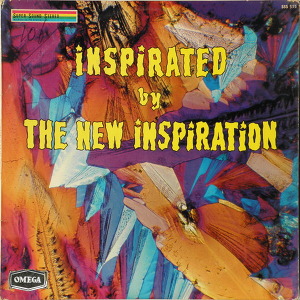
 New Inspiration
Inspirated By The New Inspiration
New Inspiration
Inspirated By The New Inspiration
Belgium 1968
SOLD OUT
Satori
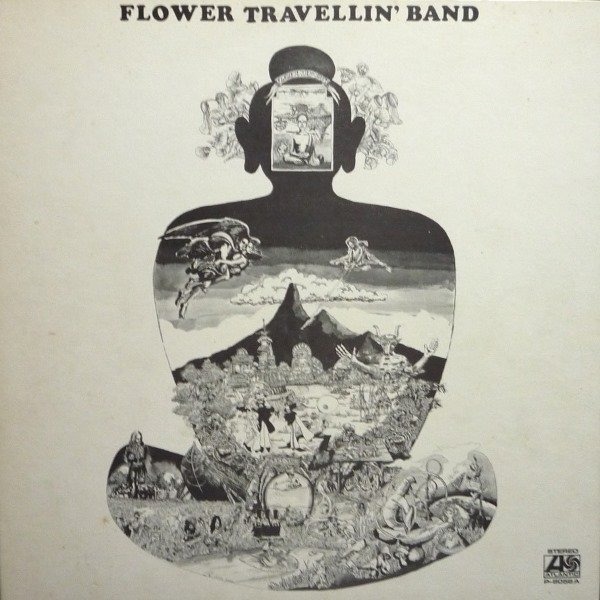


Flower Travellin' Band's second studio album, Satori, was released on April 5, 1971, by Atlantic Records. The album was recorded at Mouri Studio in Tokyo during February of the same year. This release features a catalog number of P-8056A. The band consists of Joe Yamanaka on lead vocals and harmonica, Hideki Ishima on lead guitar, Jun Kozuki on bass guitar, and Joji Wada on drums. The production was overseen by Yuya Uchida and Ikuzo Orita, while mixing was handled by Norio Yoshizawa. The sleeve artwork was designed by Shinobu Ishimaru.
Satori represents a shift for Flower Travellin' Band from their earlier practice of covering Western rock songs to creating original compositions. The album is structured as a continuous five-part suite, each section flowing seamlessly into the next. This innovative format showcases the band's ability to blend heavy doom riffs reminiscent of Black Sabbath with Eastern modal scales and Indian raga guitar phrasings. Joe Yamanaka's distinctive high-register vocals are a prominent feature throughout the album.
Thematically, Satori draws on Zen Buddhist philosophy, which is evident in both the lyrical content and musical structure. The album's title, meaning "awakening" or "enlightenment" in Japanese, reflects the exploration of these spiritual concepts. This fusion of Eastern and Western musical elements creates a unique sound, further enhanced by the band's technical prowess and compositional skill.
The production of Satori is notable for its attention to detail, with each instrument carefully mixed to create a cohesive sound. The combination of rock instrumentation with traditional Eastern influences results in a distinctive auditory experience. The album's mixing by Norio Yoshizawa contributes to its clarity and depth, allowing listeners to appreciate the intricate arrangements and musicianship.
While Satori is a crucial part of Flower Travellin' Band's discography, it also played a role in shaping the sound of Japanese rock during the 1970s. Its innovative blend of genres influenced later musicians, establishing a framework for future acts in the heavy psychedelic and stoner rock scenes. The album is frequently referenced in discussions about the evolution of rock music in Japan.
Satori was produced by Yuya Uchida and Ikuzo Orita.
| A1 | Satori Part 1 | 5:22 |
| A2 | Satori Part 2 | 6:56 |
| A3 | Satori Part 3 | 9:40 |
| B1 | Satori Part 4 | 10:53 |
| B2 | Satori Part 5 | 6:56 |
SOLD OUT


 New Inspiration
Inspirated By The New Inspiration
New Inspiration
Inspirated By The New Inspiration
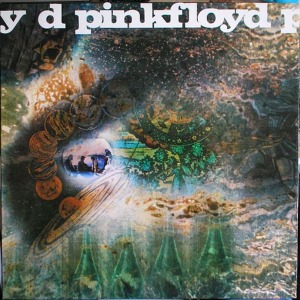 Pink Floyd
A Saucerful Of Secrets
Pink Floyd
A Saucerful Of Secrets
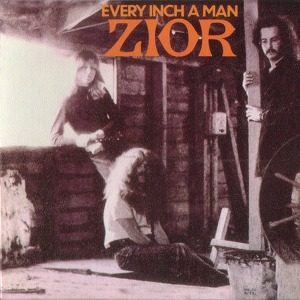 Zior
Every Inch A Man
Zior
Every Inch A Man
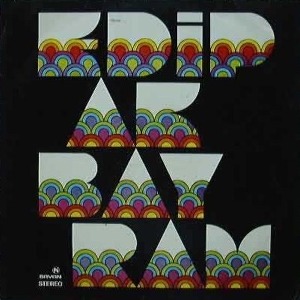 Edip Akbayram
Edip Akbayram
Edip Akbayram
 The Deviants
Ptooff!
The Deviants
Ptooff!
 Ange
Par Les Fils De Mandrin
Ange
Par Les Fils De Mandrin
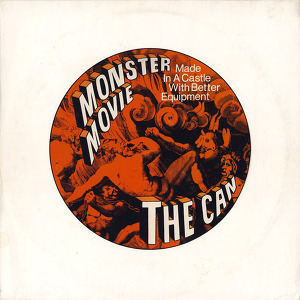 Can
Monster Movie
Can
Monster Movie
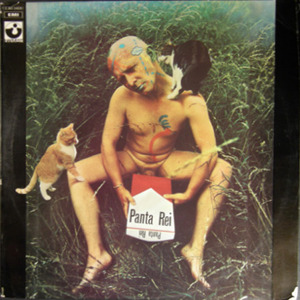 Panta Rei
Panta Rei
Panta Rei
 Nine Days' Wonder
Nine Days' Wonder
Nine Days' Wonder
 Egg
The Polite Force
Egg
The Polite Force
 Van Der Graaf Generator
The Aerosol Grey Machine
Van Der Graaf Generator
The Aerosol Grey Machine
 Quarteto 1111
Quarteto 1111
Quarteto 1111